THE OFFICIAL NEWSPAPER OF MORROW HIGH SCHOOL
Green Pages
Morrow High School
World News and Politics
Gas Woes!
by Z. Carter
The hunt for affordable gas is on as student drivers feel the pain of rising fuel costs across the metro Atlanta area.
What used to be affordable has now become a stressful part of the week as students scramble to gather funds to pay for gas.
With gas prices continuing to fluctuate, students who drive to school or work are finding it harder to keep their tanks full without emptying their wallets. For some, it means cutting back on unnecessary trips. For others, it means asking parents for extra help or adjusting work schedules just to afford transportation.
We asked a few students about their experiences, and here’s what they had to say:
“I used to fill up once a week, but now I try to stretch it to two weeks. I only drive when I really need to.”
— 11th Grade Student
“Gas is so expensive now, I started carpooling with my friends and we chip in to pay for gas. It actually helps a lot.”
— 12th Grade Student
“I have a part-time job, and most of my paycheck goes straight to gas. It’s frustrating. I am now ready to get a scooter”
— 11th Grade Student
The rising costs are not just an inconvenience—they are changing habits. Many students are becoming more mindful of how often they drive, combining trips, or even considering alternative transportation when possible.
Some are turning to carpooling, while others are using public transportation or relying more on family rides. These small adjustments are helping students save money, but they also highlight a larger issue: the growing cost of everyday necessities.
Despite the challenges, students are finding creative ways to adapt. From budgeting more carefully to planning routes efficiently, they are learning real-world financial skills that will benefit them in the future.
As gas prices remain unpredictable, one thing is clear: student drivers are feeling the impact. Until prices stabilize, the search for affordable gas and smarter ways to get around will continue for students and staff at Morrow High School.

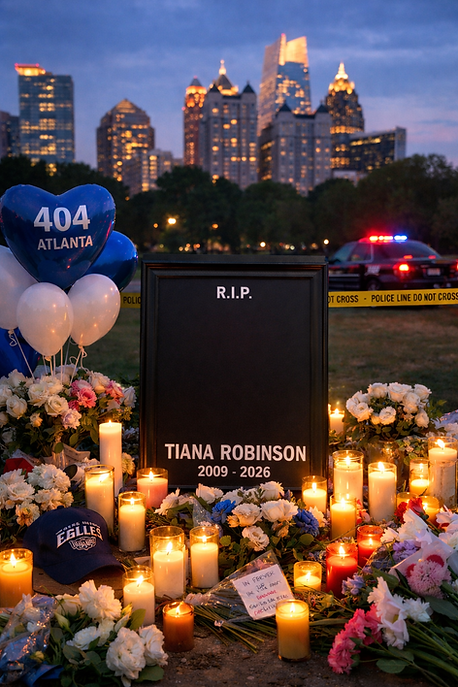
North Clayton Student Killed During 404 Day Weekend Shooting
by Staff Writer
A tragic incident during Atlanta’s 404 Day weekend has left the North Clayton High School community in mourning after a student was shot and killed at a public event.
Sixteen-year-old Tianah Robinson, a student at North Clayton High School, lost her life on the evening of April 4, 2026, following a shooting at Piedmont Park in Atlanta. The incident occurred around 9 p.m., shortly after a 404 Day celebration event had ended.
According to Atlanta police, multiple individuals fired weapons in different areas of the park, creating a chaotic and dangerous situation. Investigators believe Robinson and another victim, a 15-year-old girl who was injured, were not involved in any conflict and were likely caught in the crossfire.
Witnesses reported hearing numerous gunshots as families and teens gathered in the park during a busy weekend that included spring break, Easter celebrations, and the popular 404 Day festivities. Officials confirmed that the shooting happened after the permitted event had already ended, distancing it from the organized celebration itself.
The loss has deeply impacted the Clayton County community, as Robinson was described as a young person enjoying time with family and friends before the violence unfolded. City leaders, including Atlanta Mayor Andre Dickens, have called the incident heartbreaking and urged the public to come forward with any information that could lead to those responsible. A reward has been offered to assist in the investigation.
This tragedy has also sparked renewed conversations about youth safety, large gatherings, and gun violence across metro Atlanta. While officials note that overall crime rates have decreased in recent years, incidents like this highlight ongoing concerns about access to firearms and the safety of teens in public spaces.
As the investigation continues, the North Clayton High School community and families across the region are left grieving, reflecting on the importance of safety, awareness, and unity during community events meant to bring people together.
Jasmine Crockett A True Legend
by Amaya Malone
Jasmine Crockett is an important political leader in the United States today. She was born on March 29, 1981, in St. Louis, where she spent most of her childhood. Growing up, her parents encouraged her to work hard, focus on school, and help others values that shaped her future.
Crockett attended Rhodes College for her undergraduate degree and later studied law at the University of Houston Law Center. She first worked as a public defender, representing people who could not afford a lawyer. Through this experience, she saw unfairness in the justice system and later became a civil rights attorney, fighting discrimination and inequality.
In 2020, Crockett was elected to the Texas House of Representatives, where she focused on criminal justice reform, voting rights, and education. Just two years later, she was elected to the United States House of Representatives, representing Texas’s 30th district.
As a member of Congress, Crockett works on laws that affect people across the country. She is known for being outspoken and passionate about civil rights and equal opportunities. While people may have different opinions about her views, she is widely recognized for standing up for what she believes in.
Overall, Jasmine Crockett’s journey shows how determination, education, and courage can help someone make a difference in their community and beyond.